

Have you ever noticed how a single cloud can signal rain, or how a smile reveals joy? In Arabic, there’s a beautiful word that captures this concept: Amara (أَمَارَة). The Amara meaning in Arabic is “sign,” “mark,” or “indication” something that points to a deeper truth or hidden message.
Understanding the Amara meaning in Arabic opens a window into how Arabs perceive the world around them. This word appears in daily conversations, classical literature, and spiritual texts. In this guide, you’ll discover its pronunciation, linguistic roots, real sentence examples, and cultural significance that make it essential for Arabic learners.
The Meaning of “Amara” in Arabic
When you encounter the word Amara meaning in Arabic, you’re looking at a term that means “sign,” “mark,” or “indication.” It’s not just any ordinary word—it carries weight in both everyday speech and classical texts. The pronunciation is straightforward once you break it down: “uh-MAA-rah,” with the emphasis landing firmly on that middle syllable. You’ll hear native speakers stretch out that “MAA” sound, giving the word its distinctive rhythm. Think of it as three beats: uh-MAA-rah, where the middle part gets the spotlight.
Here’s everything you need at a glance:
| Arabic Script | Transliteration | Pronunciation | Primary Meaning |
| أمارة | Amārah | uh-MAA-rah | Sign, mark, indication |
This word belongs to a family of Arabic terms that deal with symbols, signals, and indicators. Whether you’re reading Quranic commentary or modern Arabic literature, understanding Amara meaning in Arabic opens doors to recognizing how signs and meanings connect in the language.
Linguistic Root and Grammatical usage
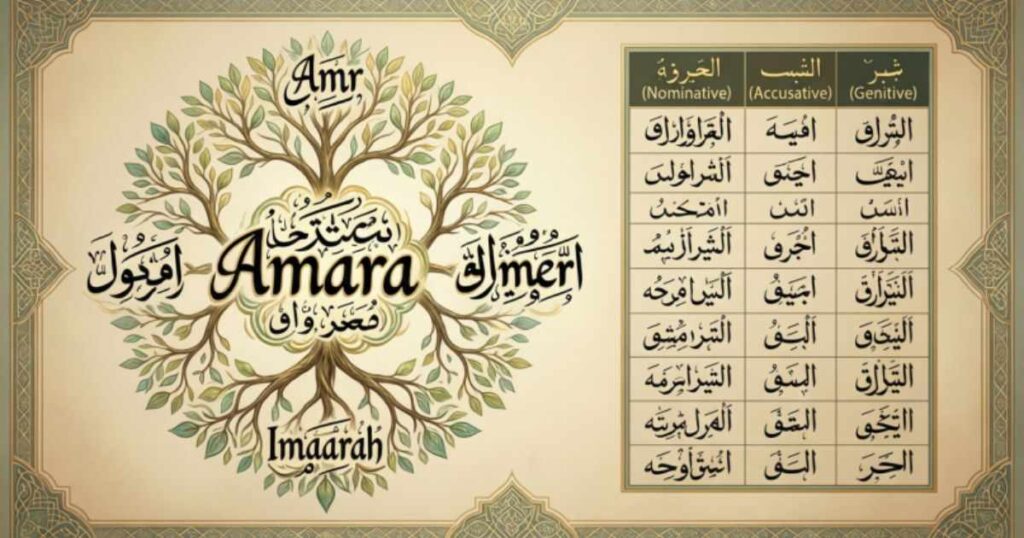
The Arabic word Amara springs from one of the language’s most powerful root systems: أ-م-ر (A-M-R). This trilateral root system forms the backbone of Arabic morphology, and understanding it helps you unlock dozens of related terms. At its core, this Arabic root A-M-R carries meanings tied to command, signal, and order concepts that naturally connect to signs and indications.
Key words derived from the same root:
- Amr (أمر) – command, order, matter
- Imaarah (إمارة) – emirate, principality (literally “place of command”)
- Ameer (أمير) – prince, commander
- Ma’moor (مأمور) – one who is commanded
| Root Form | Word | Meaning | Connection |
| أ-م-ر | Amr | Command | Direct root meaning |
| أ-م-ر | Amara | Sign/indication | Signal of something |
| أ-م-ر | Imaarah | Emirate | Domain of command |
Grammatically speaking, Amara functions as a feminine noun in Arabic. Its plural form is Amaaraat (أَمَارَات), which you’ll recognize if you’ve heard of the United Arab Emirates—literally “the united signs” or “united emirates.” The word changes based on Arabic grammar case endings, shifting between nominative, accusative, and genitive forms depending on its role in the sentence.
Arabic Sentences with Examples
Learning how to use Amara becomes easier when you see it in real Arabic sentence examples. Let’s explore how native speakers use this word in everyday life and classical Arabic usage.
1. Natural Signs
Arabic: هذه أَمَارَةٌ على المطر
Transliteration: Hādhihi amāratun ‘ala al-matar
English: This is a sign of rain
Context: When you see dark clouds gathering—nature’s way of showing what’s coming
2. Human Emotions
Arabic: الابتسامة أَمَارَةُ السعادة
Transliteration: Al-ibtisāmah amāratu al-sa’ādah
English: A smile is a sign of happiness
Context: Describing how facial expressions reveal inner feelings
3. Divine Signs
Arabic: النجوم أَمَارَاتٌ للهداية
Transliteration: Al-nujūm amārātun lil-hidāyah
English: The stars are signs for guidance
Context: Found in **Quranic Arabic** discussing **signs of Allah** in creation
4. Daily Life
Arabic: التعب أَمَارَةٌ على العمل الجاد
Transliteration: Al-ta’ab amāratun ‘ala al-‘amal al-jād
English: Tiredness is a sign of hard work
Context: Recognizing effort through its effects
5. Character Traits
Arabic: الصدق أَمَارَةُ الإيمان
Transliteration: Al-ṣidq amāratu al-īmān
English: Honesty is a sign of faith
Context: **Islamic Arabic terms** connecting behavior to belief
6. Seasonal Changes
Arabic: سقوط الأوراق أَمَارَةُ الخريف
Transliteration: Suqūṭ al-awrāq amāratu al-kharīf
English: Falling leaves are a sign of autumn
Context: Observing **signs in nature** marking seasonal shifts
Cultural and Religious Significance of “Amara”
Amara in Arabic culture carries special importance. Muslims believe the world is full of divine signs. The Quran talks about signs of Allah everywhere—in the sky, mountains, and even inside ourselves. These aren’t just random things. They’re messages from God.
In Quranic Arabic, you’ll find similar words pointing to nature’s wonders. Rain after drought? That’s a sign of mercy. Stars guiding travelers? Another sign of God’s care. Divine signs in Islam teach people to pay attention and think deeply.
Arabic culture values observation. Wise people notice small details others miss. A father’s frown might be an amara of concern. Dark clouds signal rain coming. This skill—reading signs—shows intelligence and wisdom.
Poets love using amara in their work. They write about love’s signs, wisdom’s marks, and life’s hidden meanings. It adds depth to Arabic expressions and symbolism in Arabic culture.
Even today, people use this concept daily. Body language? That’s reading amaraat. Weather changes? Natural signs. It’s part of how Arabic speakers understand their world—looking beyond the obvious to find deeper truth.
Common Misunderstandings or Mistakes
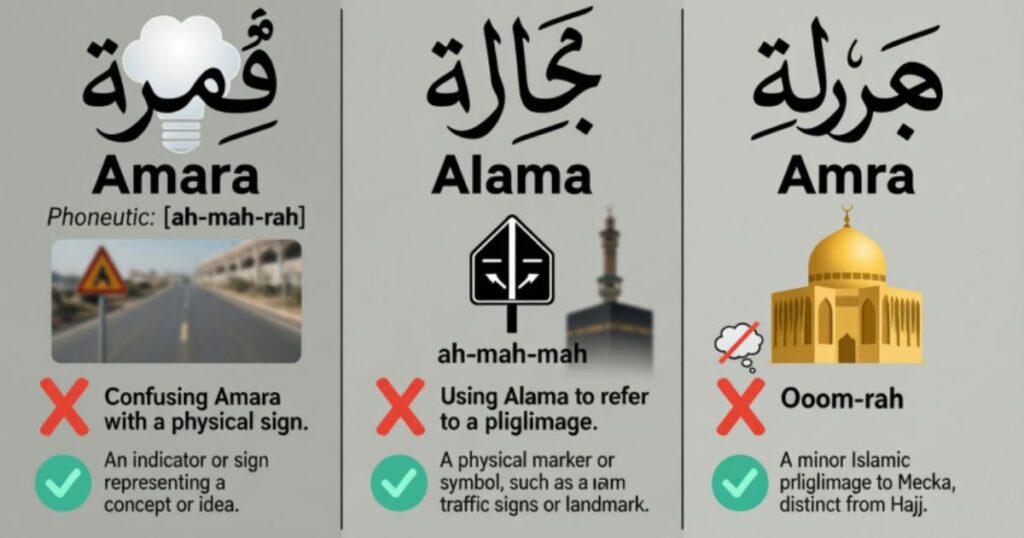
Learning Arabic vocabulary means avoiding tricky mix-ups. Let’s clear up confusing Arabic words that sound like Amara.
Amara vs. Alama
People often confuse these two. Alama (عَلَامَة) means “sign” or “mark” too, but it’s more common in everyday speech. Think of alama as the word you’d use for road signs, test scores, or bookmarks. Amara meaning in Arabic leans more classical and literary. You’ll see it in older texts and formal writing. The difference between Amara and Alama? Alama is your go-to modern word, while Amara carries traditional weight.
Amara vs. Amra
Here’s where Arabic pronunciation matters. Amra (عُمْرَة) means the minor Islamic pilgrimage. The sounds differ completely. Amara stretches that middle vowel: “uh-MAA-rah.” Amra clips it short: “UM-rah.” Miss that difference and you’ve changed the entire meaning.
Common Pronunciation Mistakes:
- Stressing the first syllable instead of the second
- Shortening the “aa” sound
- Adding extra vowels where none exist
| Word | Pronunciation | Meaning | When to Use |
| Amara | uh-MAA-rah | Sign/indication | Classical texts, formal writing |
| Alama | ah-LAA-mah | Sign/mark | Daily conversation, modern usage |
| Amra | UM-rah | Minor pilgrimage | Religious context only |
How to Use “Amara” Correctly
Want to master Arabic usage examples? Start by knowing when Amara fits best.
Formal vs. Informal
Use Amara in formal writing, religious discussions, or literary work. In casual chat, Arabs typically say “alama” instead. Think of Amara as the sophisticated cousin—perfect for essays, Quranic Arabic study, or poetry.
Sentence Structure
Place Amara like any Arabic noun. It follows typical Arabic grammar rules. Add “على” (ala – meaning “of” or “for”) after it to show what the sign indicates:
“أمارة على الخير” (amāratun ala al-khayr) – “a sign of goodness”
Writing vs. Speaking
Written classical Arabic usage loves Amara. Spoken Arabic? Not so much. If you’re reading old manuscripts or Islamic Arabic terms, expect to see it. In conversation, you’ll rarely hear it unless someone’s being deliberately formal or poetic.
Quick tip: When learning Arabic, recognize Amara when you read it, but don’t force it into everyday speech. Native speakers will appreciate your understanding of context appropriateness.
Why Learn This Word
Understanding Amara meaning in Arabic boosts your language skills significantly. Here’s why it matters.
For Classical Text Readers
If you’re reading classical Arabic or studying Quran vocabulary, you’ll encounter Amara repeatedly. Religious scholars use it when discussing divine signs in Islam. Miss this word, and you’ll miss key concepts in Quranic Arabic commentary.
Cultural Depth
Knowing Amara helps you grasp Arabic culture and symbolism in Arabic culture. Arabs value observation and reading subtle signs. This word unlocks that worldview—how they see meaning in everything around them.
Vocabulary Building
Arabic vocabulary building works through roots. Master the Arabic root A-M-R and suddenly you understand “amr” (command), “ameer” (prince), and “imaarah” (emirate). That’s Arabic word derivation in action—one root giving you dozens of related Arabic words.
Practical Benefits
While less common in spoken Arabic, recognizing Amara improves comprehension. You’ll understand poetry, literature, and formal speeches better. It’s essential for Arabic for beginners who want depth, not just tourist phrases. Learn Arabic properly by including classical terms.
Comparison Table
Here’s a clear breakdown showing common Arabic mistakes people make with similar words:
| Word | Arabic | Meaning | Usage Context | Example |
| Amara | أَمَارَة | Sign/Indication | Abstract, philosophical, classical texts | “الصبر أمارة القوة” – Patience is a sign of strength |
| Alama | عَلَامَة | Mark/Sign | Physical, concrete, everyday speech | “علامة المرور” – Traffic sign |
| Amr | أَمْر | Command/Matter | Direct orders, instructions, situations | “هذا أمر مهم” – This is an important matter |
| Amra | عُمْرَة | Minor Pilgrimage | Religious Islamic practice only | “سأذهب للعمرة” – I will go for Umrah |
| Imaarah | إِمَارَة | Emirate/Province | Political geography, leadership | “إمارة دبي” – Emirate of Dubai |
Frequently Asked Questions
What does Amara meaning in Arabic language?
Amara means “sign,” “mark,” or “indication” in Arabic. It’s used for abstract signs in classical texts and religious literature.
How do you pronounce Amara in Arabic correctly?
Pronounce it as “uh-MAA-rah” with emphasis on the middle syllable. The “MAA” sound is stretched out longer than other parts.
What’s the difference between Amara and Alama in Arabic?
Amara refers to abstract signs in classical contexts. Alama means physical marks used in everyday modern speech and concrete situations.
What is the Arabic root of the word Amara?
The root is أ-م-ر (A-M-R), meaning command or order. This root creates words like amr, ameer, and imaarah.
Is Amara used in the Quran or Islamic texts?
Yes, Amara and related root words appear in Quranic Arabic when discussing divine signs, natural indicators, and Allah’s messages in creation.
Can I use Amara in everyday Arabic conversation?
Not typically. Amara suits formal writing and classical texts. For daily conversation, native speakers prefer the modern word “alama” instead.
What are some Arabic sentences using the word Amara?
“الابتسامة أمارة السعادة” means a smile is a sign of happiness. It’s used for emotions, nature, and spiritual signs daily.
Conclusion
Learning Amara meaning in Arabic opens up a whole new way of understanding the language. You’ve discovered it means “sign” or “indication,” comes from the powerful A-M-R root, and appears in classical texts and religious writings. This word helps you read between the lines like native speakers do. Whether you’re studying the Quran, exploring Arabic poetry, or just building your vocabulary, Amara connects you to deeper cultural meanings. It’s not just another word it’s a window into how Arabic speakers see the world around them.
Now you can spot the difference between Amara meaning in Arabic and similar words like Alama. You know when to use it in formal writing versus everyday conversation. Remember, Amara suits classical contexts while Alama fits modern speech. Practice recognizing it in texts, understand its pronunciation, and appreciate its abstract nature. Keep exploring Arabic word roots, and you’ll unlock dozens of related terms. The more you learn, the richer your Arabic journey becomes. Start noticing signs everywhere that’s thinking like an Arabic speaker!

Emma is a researcher and writer with 4 years of experience studying Arabic names and meanings. At MeaningOfArabic.com, she curates insightful content that connects language, culture, and identity through the timeless beauty of Arabic names.